< The Taiwan Take

3. Making a Political Drama: Sylvia Feng ("Island Nation")







Sylvia Feng (馮賢賢) is the producer of a political TV drama, Island Nation (國際橋牌社) - which looks at Taiwan from 1990-94 during its transition to democracy. Sylvia and J.R. discuss the media industry in Taiwan and the challenges media and creative professionals face today.
"A lot of people have fear in their hearts about anything political. So, trying to make a political drama would be a no-no thing for a lot of people in the business."
Feng has had over three decades of experience in broadcast journalism, including a long career in Taiwan’s public television network, of which she helped to build and later came a president. The challenge of balancing politics, profit, and creative freedom in an ever-changing, increasingly competitive market is a global issue, and this is The Taiwan Take.
Hosted by J.R. Wu - Chief of the Secretariat for INDSR (Institute for National Defense and Security Research) in Taiwan. Wu is a former journalist with nearly two decades of media experience in the US and Asia. She has led news bureaus for Reuters and Dow Jones.
Sylvia Feng (馮賢賢) is the producer of a new political TV drama, “Island Nation 國際橋牌社" - which looks at Taiwan from 1990-94 during its transition to democracy. Sylvia and J.R. discuss the media industry in Taiwan and the challenges media and creative professionals face today. Feng has had over three decades of experience in broadcast journalism, including a long career in Taiwan’s public television network, of which she helped to build and later came a president. The challenge of balancing politics, profit, and creative freedom in an ever-changing, increasingly competitive market is a global issue, and this is The Taiwan Take. Trailers and Facebook to “Island Nation".
Hosted by J.R. Wu - Chief of the Secretariat for INDSR (Institute for National Defense and Security Research) in Taiwan. Wu is a former journalist with nearly two decades of media experience in the US and Asia. She has led news bureaus for Reuters and Dow Jones.
Follow us on Twitter @ghostislandme
EPISODE CREDIT | J.R. Wu, Host | Emily Y. Wu @emilyywu, Producer, Editor | Sam Robbins @helloitissam, Research | Thomas Lee, Brand Design | a Ghost Island Media production | www.ghostisland.media
Support the show: https://patreon.com/Taiwan
See omnystudio.com/listener for privacy information.
Transcript
(The transcript has been edited for brevity and clarity.)
WU Today we talk with Sylvia Feng, producer of Taiwan's first political drama, Island Nation 國際橋牌社. We talk with her about her experience working on the show. It looks at Taiwan from the years 1990 to 1994. Sylvia has had a very long career, illustrious career in media here in Taiwan and abroad. We're lucky that she'll be able to share some of her experience and talk about the current challenges the industry is now facing.
Although there is more freedom to talk about Taiwan's past within Taiwan, many creative industries rely on China for their revenue. This puts a limit on the kind of topics many media producers are willing to discuss.
In our interview with Sylvia, she will share firsthand experience dealing with these issues, as well as her thoughts about the future of the creative industry in Taiwan, and internationally.
The interactions between politics, profit and freedom of speech are a global issue, and this is The Taiwan Take.
I’m your host today, J.R. Wu.
Welcome, Sylvia. My goodness, you just finished a busy season. The first one for Island Nation.
FENG Right.
WU How's that been going?
FENG It's been a little tough. For two reasons: One, money was a problem. So we had spent quite some time trying to find investment. And then production was pretty tough. And then we're trying to get the right platforms to carry the show.
WU I saw the trailer for the show. It looks outstanding.
FENG Thank you.
WU You've got some real good tones in there.
The story line from 1990 to 1994, that was in former President Lee Tung-Hui years, and how Taiwan evolved into a democracy. Of course not in that short time, but a lot of things were happening back then and on the world stage. Give us a teaser of the show.
FENG Island Nation season one starts from 1990. That was a time of drastic change in the world when the Berlin Wall fell. The Soviet Union also went down. And Tiananmen Massacre just took place. And Taiwan just had its first native-born president after more than 50 years. So it was a tremendous time for people who have been through it.
Our story starts in March 1990. Right before president Lee Teng-hui, was to be sworn in.
WU And this was already after martial law had been lifted in Taiwan. I think that would have been…
FENG 1987. And the last dictator, the last strong man, Chiang Ching-kuo, died in 1988.
Lee Teng-hui, at a time as Vice President, took his place as the acting president. But then in February I think, or March 1990, he was elected by the National Assembly, not by all the people but indirectly by the National Assembly as the next president. And our story started there.
WU You were telling me earlier before we started airing, that your audience, some of your focus groups, they watched it, and they were laughing. And also there is no hero, one hero in this story, what's going on?
FENG Right, if you watch American political drama, there is always this big hero, the President, or the Secretary of State, or the anti-hero, so to speak, like the House Speaker. But for us, we don't want to focus on just one single hero, because that would be the President. We want to focus on the people whose lives are affected by politics because politics has been dominating in Taiwan. It affects everybody's lives. So we created six fictional characters. Six young people. Three females, three male, to carry on the stories.
WU What are some of your favorite scenes in the first season?
FENG There are a lot of scenes that make me laugh or, or feel touched. But there's this one line that I like the most, which is from a character of the then-premier (楚長青 Chu Chang-Qing) —one major character in season one. He is kind of the political enemy of the President. But the President appointed him as premier, because he used to be a military strong man, so as to take him off the military. And he got promoted to be the premier. And then the president started to want to talk to the Chinese side, and the premiere was opposed to it.
And he said, 我們跟共產黨沒有什麼好談的. “There's nothing that we can talk to the communist.”
WU Let's hear a clip of that right now.
*Audio Clip from Island Nation Season 1*
WU Why is that such an interesting line for you?
FENG Because looking back from the 29 years time it sounded so ironic, because those people in those days, who opposed talking to the communists are exactly the people who are closest to Chinese communist and who are supporting unification with the Chinese Communists, in Taiwan. So it's so ironic. I think a lot of people watching this show would have a lot of thoughts on that.
WU That's true, because Taiwan has come a real long way since then, my goodness.
Here we are sitting your first political drama after already a very long and bright career in media. So, Sylvia, just to give our listeners an idea, you have over three decades of experience in radio and television. You were very much a core part of public television station here in Taiwan, you also helped bring and support that effort up.
Your own background. Sylvia, you were at Voice of America for quite a number of years, when you lived in the United States. Tell us how some of your background shaped you and your sense of Taiwan's media environment and how it has evolved over the years.
FENG I went to the United States for graduate studies. I went not because I wanted to go to graduate school, because at the time, Taiwan was under martial law, and after I graduated from college, I didn't know what to do. There was nothing that I wanted to do. So in the end, I had to leave, I had to do something. So the only choice ahead of me was going to graduate school in the States. So I went.
And I remember on my first day, I went to SUNY Buffalo. On my first day in campus, I was alone there and this vast campus and I thought to myself, I am so free, nobody's bothering me. And I thought I would never go back to Taiwan.
WU Because when you left, Taiwan was under...
WU & FENG Martial law.
FENG It was a police state. And also as a woman, I felt even more oppressed than a regular male citizen under those circumstances, and it was in American campus that I decided that I didn't want to go back to Taiwan. But then, martial law was lifted in 1987. And I started to change my mind. Then in early 1992, an opportunity came up because I heard that they were setting up public television in Taiwan. And I thought to myself, wow, this is a great opportunity for me to go back and help rebuild the TV journalism business.
WU Give us an idea of what the media landscape was at the time. Was it as competitive as it is now, were there lots of cable stations, or online internet stations?
FENG Back in the early 90s? No. There were only three terrestrial TV stations all owned by the government. One by the party, the other by the provincial government, and the third by the military. That was the background when they were setting up public television, because it was about five years into the lifting of martial law. And people were dissatisfied that all the major media were controlled by the ruling party.
WU And so public television at that time, it was a pioneer.
FENG I thought it was but then when I came back, I found that it was kind of a mixture of new and old, and maybe more old than new, because it was set up by the government. And a lot of people were hired from inside the government, or from the old, three terrestrial stations that had been under government control. So the ideology there was not something that I had expected.
WU And then when we fast forward to today, there's a lot of media out there that is not owned by the government, but we're still seeing a lot of gaps in. In the United States, they call the media the Fourth Estate. Here in Taiwan there isn't that concept.
FENG There is that concept but it's not in practice, only in some people's mind. We’ll also have to go back to where the stories of Island Nation unfolds. Because in the mid 90s, when the people are asking the government to liberalize their control over the media, they passed the cable TV act. And then the government released a lot of new licenses for cable TV stations. But they did not regulate how many cable stations we need or how many news channels we need. S
o by the end of the 1990s we already had more than six or seven news channels, 24 hour news channels in Taiwan. It's way too many. And the cable news operators all tend to run a number of stations. And then it was this rise of the internet. So by 2016, the commercial income of the network has surpassed that of all the TV stations put together.
WU What does that mean for quality news in Taiwan?
FENG That means everybody has to cut costs down. So for cable news channels they hire young people with low salaries. They don't do investigative stories. They follow up stories on the internet. They do infotainment a lot. And they tend to be very sensational. And they don't even check the facts,
WU Then what does this mean for citizens and an electorate now, that has to decide who their next president is and the shape of their own Congress here. We call it the Legislative Yuan. What does it mean for citizens who need news?
FENG I think it's a huge threat to our democracy because we don't have reliable news sources. People see a lot of disinformation spread on the internet, and we've been talking about this fake news and disinformation, warfare for the past year since the last election last year in November. I think people are more aware of the problem right now. But we are far from finding a solution.
WU Tell us the importance and the role, Public Television Service, that you were once at a president of, plays in Taiwan.
FENG I think for creative freedom and also protection of diversity for cultural diversity. Public television should and also always need to play a central role. For instance, when I first came back from the states to work at public television, I started a training program for indigenous people to be journalists. That was unprecedented. Since then, I conducted two more training sessions, leading up to the creation of the indigenous peoples channel (TITV), and also a byproduct of that, the Hakka channel (Hakka TV). Now public television also owns a new channel that was set up this year, the Taiwanese channel (Taigi TV). I think to promote cultural and linguistic diversity is a very important mission for public television.
And also to be at the forefront of maintaining creative freedom and freedom of speech.
For instance, I used to be a documentary producer for many years. And it was always my goal to support as diverse a pool of filmmakers as possible, because Taiwan has an amazing pool of cultural diversity. We have so many languages spoken and a very complicated history. For instance, we have more than 15 or 16 indigenous nations recognized by the government and more languages being spoken. And we’re thought to be the homeland of the Austronesian people in the world.
And then we have the Hakka people and the Taiwanese language-speaking people, and the mainlanders coming to Taiwan after 1949. So the cultural diversity and the complexity of the histories make things very interesting. And I think it's up to public television, to keep that diversity alive and make it visible.
WU Do you think it's getting drowned out by all those cable TV and online broadcast nowadays?
FENG Public television in Taiwan has never enjoyed great popularity even though it’s highly thought of, but in terms of TV rating, it's never been competitive with commercial stations.
WU I do like PTS myself. I translated for their English language broadcast before and the people there, working with them is just, really professional, super nice.
FENG I think I've always been a trailblazer, to be honest. Because one thing we didn't mention is that after the launch of Public television in 1998 there was a resolution attached to a Public Television Act, which stipulates that public television shall not do daily news for three years.
Which is against the spirit of public television. So, in 1999, I persuaded the then-president to let me do daily news. And we started the public television daily news in December 1989.
WU That’s blazing a trail.
FENG In violation of the unlawful resolution of public television.
WU Now, we have to say for our listeners. You definitely are a pioneer yourself, Sylvia. However, sometimes it's your personal life and things that have happened in it that resonates with me. You took a case to Taiwan's Constitutional Court once. This is the equivalent of the US Supreme Court in Taiwan. Your son wanted to officially take your last name when you and your husband divorced. What was that about?
FENG My son was born an American citizen. And he took my family name because I talked my then-husband into it, accepting it. We had two older children before my son and every time when a child was born, I said to my husband can she take, because we had two daughters, can she take my name? And he said, No. And then when we had our third child, I said, Come on. It's my turn. You already have two children taking your last name and this time I want the child to take my last name. And he said, “Okay,” so my son had his American, which name was my family name, my surname.
And then I took the children back to Taiwan. And the household registration office discovered that my son did not take my husband's surname. So they forced it upon him to change his surname to that of his father's. And I took this case to the Constitutional Court because it violated the Article Seven our Constitution, right to equality.
WU I love that. What happened next?
FENG What happened next was that the judges let it sit in the court without hearing the case. And after sometime, I heard from my lawyer that one female justice asked her to relay this message to me saying that they're probably not going to hear the case. So could I withdraw it?
I agreed because if my lawyer didn't want to fight and this very illustrious female judge didn't want to fight for this precious case. I say precious, because a lot of women needed the law to change. For instance, divorced women or women who went through traumatic domestic abuse who had to run away from their homes with their children, and who needed to have their children to take their own family names so their children are better protected, and their children did not want to take the fathers surnames could not do so, and they could not come forward because of all the pressures from their families: the families of their husbands and from the society in general. So I was the only one who was willing to go forward and give my case to the Constitutional Court, and they told me they didn't want to hear it.
WU Now as I understand there is a happy ending to this. I read in an interview that you gave in 2008. That civil law changed and it was actually alright by then if a child wanted to take his mother's name, and I take it your son is surnamed Feng, like you.
FENG It's not as easy as you just described. So divorce is a precondition. And then if within a marriage, I think you have to have a kind of agreement at the beginning of your marriage. It's quite complicated. And I remember that when we were going through this debate, I was at the parliament. And a woman from the Interior Ministry said that no one shall break the 5000 year tradition of paternal lines. And I told her, “Have you studied biology?” Like my surname Feng, dates back to maybe 3000 years ago, the Zhou Dynasty said, said to be the descendants of the King Zhou Wen Wang. And I may be the 100th generation descendant. So my bloodline of the Feng family is one hundred times of one half and how much is that?
That's the kind of paternal bloodline you're talking about. Please be more scientific. But of course they didn't want to listen to me.
WU So, Sylvia, you're not afraid to challenge 5000 years of patriarchal tradition, you are not afraid to challenge Taiwan's highest court. You willingly try and successfully create a public service television station in Taiwan. You know, next, I'm going to ask you about the China factor and media.
FENG Okay.
WU Right, so I'm going to ask a few of the questions that may be more difficult in this, talking about a political drama. Now, you talked about some challenges - funding. You talked about how investment in this particular show was difficult. Why is that?
FENG I think the long history of martial law, which lasted about 38 years in Taiwan has a lasting impact on the Taiwanese collective consciousness. A lot of people have fear in their hearts about anything political. So, trying to make a political drama would be a no-no thing for a lot of people in the business. And on top of that, in recent years, we've been seeing the China factor in Taiwanese film and television. Lot of talent have been drawn to the Chinese market. They offer better pay, more opportunities to produce, and therefore people are afraid that if they participate in this project, they will be excluded or punished in the Chinese market. And also for investors, they would try to steer away from this kind of venture so as not to be labeled, so as not to be affected, if they have business in China.
WU You fight to get more programming on Taiwan history, indigenous languages, Hakka, you're launching the first political drama. How does this work nowadays, when the China factory looms so big?
FENG I think nowhere in the world does the loom bigger than in Taiwan, the China factor. And we all know, and I've seen the statement that if you work in the Chinese market, you're asked to sign a statement saying that you will not support anything they deem as pro-Taiwan independence, otherwise you will be punished heavily. So, finding money is difficult because investors are afraid. Finding the crew is difficult and finding actors is difficult. That we all accept too because from the very beginning, we have ruled out selling the show to the Chinese market. But right now as we are in the phase of trying to get on platforms, again, we're facing similar difficulties because even for domestic operators, they think it’s politically sensitive. So even though the show is ready, they won't show it before the election which is to be held on January 11th. It’s all been very difficult, I have to say. No drama production has encountered as many difficulties as we have.
WU That sounds like other industries as well, not just the entertainment industry.
FENG Since this is the first attempt at making a political drama, people tend to think that maybe this is kind of an experiment. I'll wait and see how you guys do. So after maybe the launch of the first season, I think people will change their mind because it's quite entertaining. And according to reaction from our focus groups, they liked it and enjoyed it. They laughed a lot, especially in Kaohsiung. You know people in Kaohsiung are more outspoken and more upfront about how they feel. We had about 20, 30 people in the room and they laughed throughout the show. They laughed all the time. And they laughed very loud. It was very satisfactory for producers to watch that.
WU So when will Island Nation launch? The first season there will be 10 episodes, and they're 60 minutes long. Right?
FENG Right, I think domestically in Taiwan it will be launched in February. We haven't signed a contract yet, so I can't name this station. But hopefully the audience will be watching it. And also hopefully in sync on international platforms as well, we're talking to several OTT operators right now.
WU So, over the top operators. So are there different challenges when you look at potential OTT platforms versus the terrestrial one here in Taiwan?
FENG I can quote one of the buyers from a major OTT platform, who after seeing all 10 episodes.
WU Which I heard is unprecedented for potential buyers looking at the episodes?
FENG Right. Given the fact that we're a political drama from Taiwan, I guess. He shared his thoughts with us. He said, I find it very interesting, and entertaining. And even though I don't understand Taiwanese history, I think I've gotten to understand it a little bit more after seeing your show. Particularly, some of the actors performed really well. And that was impressive. So that was kind of satisfactory, I think, for us to hear this from a foreign professional, who doesn't really understand Taiwanese politics.
WU As the producer of this show, which oversea’s the audience do you think this show will resonate more with? Japan? United States? Western Europe, Russia? I don’t know.
FENG Well, I have to be frank, this is the first time we're doing this. So we're not quite sure who our audiences are, where they are and who they would be like.
But I would think that for Japanese audiences, they would be interested in recent Taiwanese political history, because what happens in Taiwan affects Japan a lot. Likewise, what happens in Japan affects Taiwan a lot as well. And also, I think people in the world who would pay attention to what has been happening in Hong Kong would be interested in what has been happening in Taiwan.
This democracy is almost a miracle in the world. And we started our story from the beginning of this miracle. I think people would be interested in an emerging - a difficult democracy, who you can almost call a success story for 30 years without blood-shedding, a peaceful transformation from a dictatorship to democracy. That kind of story, I think, would appeal to a lot of people in the world, even though I don't know where they are. I have an American engineer friend from California, he recently asked me what I've been doing. I said, “I've been been producing this political drama.” He said, “Would it be available in America? I'd love to watch it.”
WU Right. That sounds awesome. Oh actually, I wanted to ask you there's been a lot of comparisons to Island Nation with the political drama House of Cards. There's also been a comparison with Australia’s Secret City. Do you think those comparisons are valid?
FENG In that they all deal with political stories. But we have a totally different tone. For instance, House of Cards is quite dark. Everybody in the House of Cards is a bad person.
You can almost say that it's very heavy.
WU Well said by the producer.
FENG Yeah, Secret City is quite entertaining as well. And I was amazed that when they released it in 2016, the China factor in Australia had not set alarm, yet. I think what's amazing about Secret City is that it has this foresight about international politics. But for Island Nation, since I just talked about so much fear in people's hearts about political stories, and Taiwan being a very divided nation in terms of people's values and political ideas. For instance, some people are pro-independence, some people are pro-unification, and most people are somewhere in between. And when we talk about these national identity issues, people are always very vehement and very divided.
So we don't want to do a very heavy handed story. We want it to be light hearted. We want to bring everybody together - thinking that these are the days that we've been through. These are the memories and the stories that we collectively experienced.
So there is no clear-cut bad people in the story. Everybody is three-dimensional; they have their dark sides. They had their gray areas. They also have a personal, more personable side to their character, including the Premier character that I just talked about. We actually had a lot of discussion about the characterization of this role. In the end, we decided that we didn't want to cast him as enemy of democracy. We wanted to cast him as a man who was a true believer of his own values.
WU That’s really interesting. I need to go back and look at that episode.
This China factor has gotten so big. Your Island Nation has faced it. This year’s Golden Horse has faced it. I mean, Golden Horse is the Chinese Oscars. It's been around since 1962. Anybody who is anybody in overseas Chinese, Asian, Taiwanese, Malaysian, Hong Kong, what have you community - If they are creative artists and actor, a producer, a filmmaker, a soundtrack writer, they all want to be at the Golden Horse. What happened this year?
FENG I think the Chinese government has ordered the Chinese film industry people, to boycott Golden Horse, because last year as you all know, Taiwanese filmmaker who was awarded the Best Documentary Director, Fu Yu, said on stage that she supported Taiwanese democracy, something like that, and outraged the Chinese government. They ordered the people to express their disapproval of what Fu Yu said onstage. I witnessed that because I was at the ceremony and I saw a Chinese actor who was awarded Best Actor I think, said that Taiwan was part of China. I mean to the displeasure of the Taiwanese audience. I think it was really offensive for a guest to be awarded a very enviable prize to say that on stage, but they all did that. And then later on, I found that they were instructed to do so, and I felt sorry for them.
China factor also has huge influence in Hollywood as well. People have been talking about a lot, right? Offending China is not safe at all these days in any part of the world.
WU Because there’s a commercial component to it.
FENG That's right. Because they have put money in so many entertainment business, especially in Hollywood
WU Doesn't this diminish creativity in the arts?
FENG Of course it does.
WU You’ve censored yourself?
FENG It has tremendous impact on Taiwan. People have been self-censoring their own stories for a long time now, for more than 10 years. For instance, if you make a drama that you want to sell to China, then you make sure that no children are born out of wedlock in your stories, stuff like that. Whatever they dislike, they will not approve by their censorship system, will not appear in your story. And does that not affect your creative freedom? Of course it does. And it has been so for as long as I know - for almost two decades now. Especially after China's 大國崛起 (The Emergence of the Huge Country), after the 2008 Olympics, Beijing Olympics, this has been very obvious.
WU I want you to not be yourself with this next question. What would you say or give advice on to Chinese actors, or even just 5000 years of Chinese arts going forward?
FENG I think I only have things to say to Taiwanese artists. Be brave, use your creative freedom to the fullest, because it's really precious. And I feel for the Chinese artists because they don't have this kind of freedom. And I think it's a loss for the Chinese film industry, not for Taiwan, that the Chinese filmmakers are not allowed to participate in the Taiwanese Golden Horse Film Festival. Because it's in Taiwan, that the greatest Chinese films are lauded, are being awarded, are being shown. Whereas a lot of good Chinese films are not allowed to be shown in China.
So I feel for them, but what can I say to them? Be brave and be locked up in jail? I cannot say that to them. I only can say to my Taiwanese compatriots that you guys have to exercise your creative freedom, and do as much as you can. And that's why we're making Island Nation. I won't say is a perfect work, but we try as hard as possible to make it work, to make it entertaining, to tell our stories while we still have this freedom.
WU Sylvia, so one last question. What's gonna happen in season two?
FENG We're working on the stories. We're developing the scripts right now. And season two will cover in ‘95 and ‘96, the Taiwan Strait Crisis, when China had live fire missiles, seven military exercises from ‘95 to ‘96, aiming at disrupting Taiwanese elections. And in 96, we had our first popular election of the President, and that was a huge, huge victory for the people of Taiwan. And we've been through a lot of threats. So season two will be even more entertaining.
WU Stay tuned. So we'll end the show with the theme song of Island Nation, Sylvia Feng, thank you very much for speaking with us today.
FENG My pleasure.
WU I’m J.R. Wu. And this has been The Taiwan Take.
This episode was produced and edited by Emily Y. Wu. J.R. Wu is our host. Research by Sam Robbins and Yu-Chen Lai. Additional production support by Allison Chan. Recorded at INDSR.
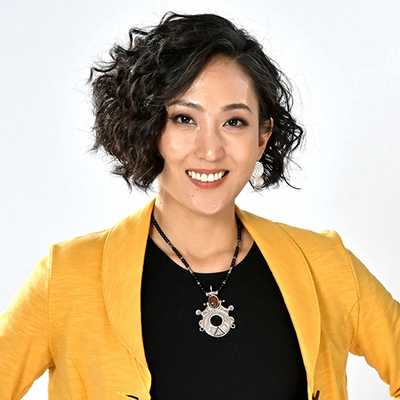
Host - Emily Y. Wu
Host - Emily Y. Wu
Emily Y. Wu is the executive producer of Ghost Island Media, a podcast network she founded in 2019. She is the presenter of The Taiwan Take podcast, Game Changers with Emily Y. Wu television series, and a co-host on the Metalhead Politics podcast.